
Conservation innovation doesn’t always arrive looking like a major scientific breakthrough. Sometimes, it looks like an egg-shaped lure holder. Sometimes, it means taking a few kilograms out of the load carried into the backcountry.
Those changes can sound small on paper. But repeat them across hundreds of traps, thousands of trap checks and kilometres of rough country, and they start to matter a great deal.
That is the thinking behind two new additions to the Connovation range: NestGard and LureGard. Both were created by Christchurch-based Trap Tools, and both began with practical problems encountered by people doing the work in the field.
Trap Tools grew from hands-on conservation work in and around the Nina and Doubtful Valleys. The people behind it understood that much of the easier trapping country had already been covered. The next challenge was reaching ridges, tops and harder-to-access areas, often with limited time, people and resources.
That creates a fairly unforgiving test for equipment. Every extra kilogram has to be carried. Every awkward lid has to be dealt with again and again. Every lure stolen by a mouse means a trap may spend part of the cycle without the bait intended to attract its target species.
NestGard and LureGard tackle different parts of that problem, but they share the same approach: notice what is making the job harder, then design a simple tool that makes it easier.
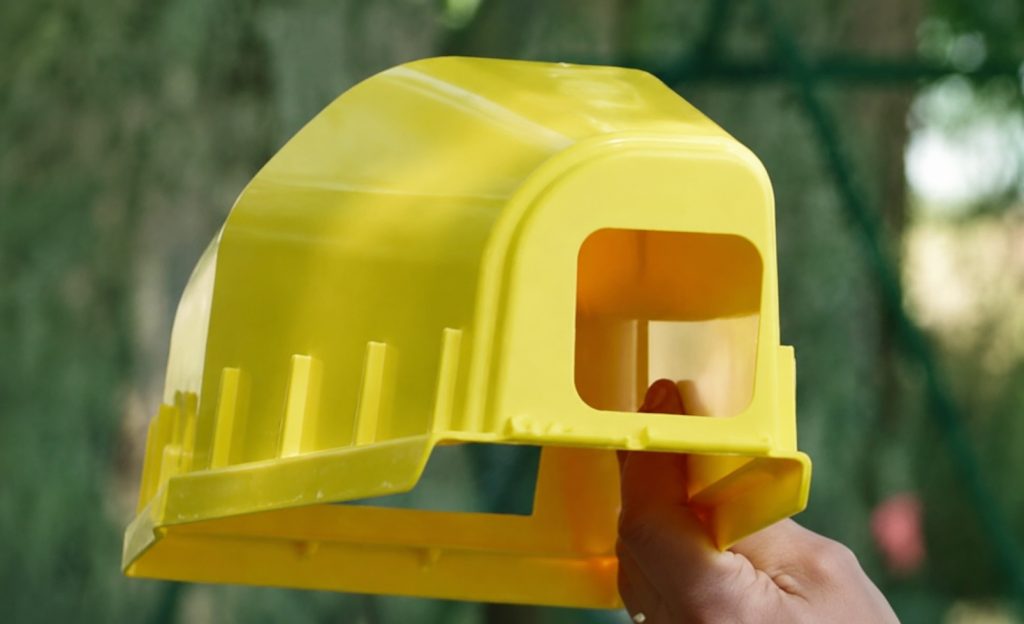
NestGard is a lightweight, stackable enclosure designed specifically for the DOC150 trap. The enclosure weighs 1.2kg, with the complete enclosure-and-trap combination coming in at about 2.1kg.
That matters when the trap line is nowhere near the car park. A lighter enclosure is easier to move into remote areas, while the stackable design helps when several units need to be deployed at once. It is manufactured in Christchurch from UV-resistant, recyclable plastic and designed to handle field conditions including snow loading and falling branches.
There is practical thinking throughout the enclosure. The lid detaches completely, making cleaning, rebaiting and resetting less awkward. A ramp creates a step down onto the DOC150 treadle rather than requiring the animal to step up. NestGard is also available in front-entry and side-entry run-through configurations. Trap Tools says trail-camera observations helped inform the run-through option, after rats were seen more willingly investigating tunnels they could move through rather than enclosed dead ends.
These are design choices, not a promise that any one setup will guarantee a catch. But they show what happens when equipment is developed around the realities of trap servicing and animal behaviour.
A trap enclosure also needs to be appropriate for the environment in which it is used. Trap Tools reports that DOC’s Trap Technology Advisory Group assessed the NestGard150 as equivalent to trap tunnels conforming to relevant animal-welfare standards, and that it has been included in DOC’s Trap Systems Performance Standards information.
The enclosure dimensions are designed to meet requirements for use where kiwi and weka are present. Where kea are present, a stamped metal grille option is available to meet the relevant design standard.
It is an important reminder that good predator-control equipment isn’t only about the target pest. It also needs to account for the native species the work is intended to protect.
LureGard solves a different problem, and it is one many trappers will recognise immediately.
You set a trap with lure intended for a rat or stoat. A mouse arrives first, helps itself and carries the lure away. By the next check, you may be left wondering whether the target species ever had much reason to investigate the trap at all.
LureGard is an egg-shaped polycarbonate holder that helps prevent mice removing the lure while still allowing scent to escape through its grilles. Its solid upper surface also helps protect the lure from rain. It fits into the standard egg holder used in conventional traps and can hold suitable lures including pellets, pieces of fresh meat and peanut butter.
The egg shape does more than hold bait. Eggs are an established visual lure for stoats, while the shiny white surface reflects moonlight and is intended to be easier for rats and stoats to see in dim conditions. It can even double as a scoop for pellet bait, which is the sort of small field-friendly detail that makes sense once you are using it with gloves on.
According to Trap Tools, trappers working in high-mouse-density parts of the Doubtful Valley had seen bait disappear within two nights. Their reported experience with LureGard was that the bait remained until the next trap check.
Trap Tools also reports using around 700 LureGards in the Doubtful and Nina areas, with only one disappearing from a trap over six months. Those are manufacturer-reported field observations rather than independent performance guarantees, but they demonstrate the scale at which a seemingly small problem — and its solution — can operate.
One mouse stealing one lure is irritating. Mice removing bait across an entire network can mean more rebaiting, more cost, more time and less confidence that each trap is working with the lure you intended. Keeping bait protected for longer can therefore make trap-line servicing more efficient, especially where checks are necessarily spaced apart.
What we like about NestGard and LureGard is that neither product is innovation for innovation’s sake.
NestGard responds to the weight, transport and servicing demands of trap enclosures. LureGard responds to disappearing lure and exposure to rain. Both were developed by people involved in conservation, tested through real field use and manufactured here in New Zealand.
They won’t replace good trap placement, the right lure, regular checking or the persistence that effective predator control requires. They simply make parts of that work a bit more practical — and when the same work is repeated across a large project or a long backcountry line, that can add up to a meaningful difference.
NestGard and LureGard are now available to purchase from Connovation. Take a closer look online and choose the option that suits the traps, target species and conditions on your patch.