
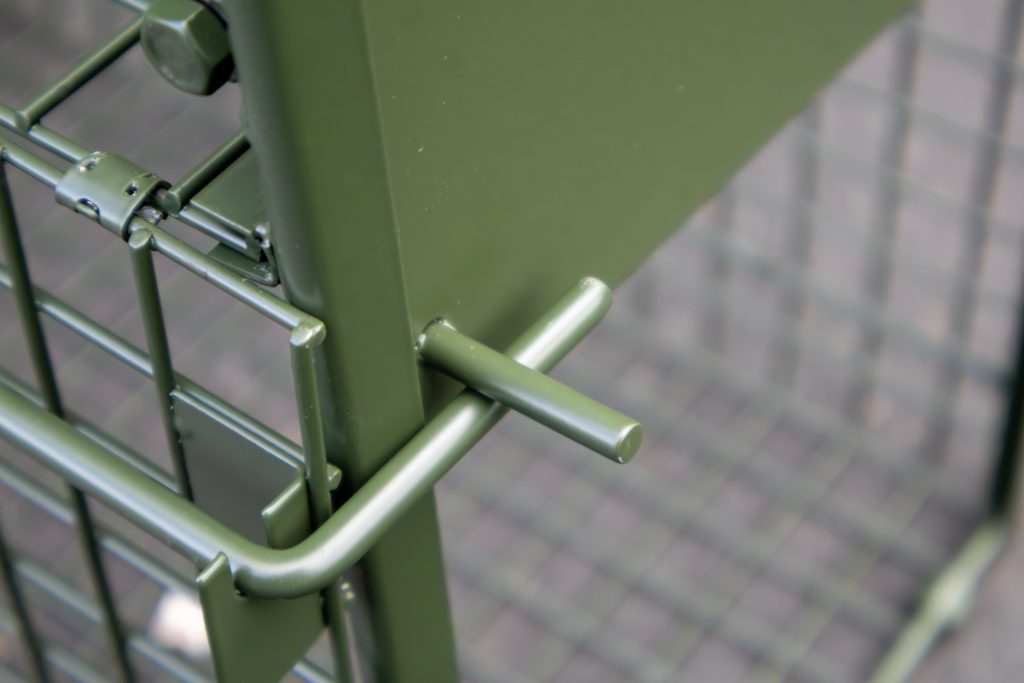
If you’ve ever looked at one of our traps and thought, “Well…it’s just a trap,” we promise there’s a lot more going on than meets the eye.
Every curve, spring, latch and material has been carefully thought through. That’s because a trap isn’t just another product on the shelf—it has an important job to do. It needs to work reliably, often in some of New Zealand’s toughest conditions, and it needs to do that while helping protect the native species we all care so much about.
For us, designing traps isn’t about making something that catches pests. It’s about making something that helps people do conservation better.
People often imagine product design starts in a workshop with someone sketching ideas on a whiteboard. Sometimes it does—but more often, it starts with a conversation.
It might be a contractor who’s tired of climbing steep banks only to find a trap jammed with mud. It could be a volunteer who’s spent half their Saturday bending over to reset traps. Or maybe it’s a farmer asking, “Can you make this easier?”
Those conversations matter because the people using our equipment every day know exactly where the frustrations are. We listen, take those ideas away, and start asking ourselves one simple question:
“How can we make this better?”
Sometimes the answer is a completely new product. Other times it’s a tiny design change that saves just a few seconds every reset. Across hundreds of traps, those seconds add up.
New Zealand has a habit of finding weaknesses.
Rain gets into places you didn’t think possible. Mud sticks to everything. UV slowly destroys cheap plastics, and salt air has no mercy on metal.
That’s why our products spend plenty of time outdoors before they ever reach a customer. We want to know what happens after six months in a damp gully, not just after ten minutes on a workbench.
If something breaks, rusts, sticks or simply becomes annoying to use, we go back and improve it.
Sometimes the bush is our toughest product tester—and honestly, that’s exactly how we like it.
One of our favourite examples of this thinking is the Flipping Timmy Possum Trap.
At first glance, it looks familiar. That’s because it builds on a trap many people already know and trust. But rather than reinventing the wheel, the designers asked, “What annoys people about using these every day?”
The answer led to clever improvements.
Mounting the trap vertically means less bending over. Holding the catch off the ground helps keep everything cleaner. Resetting takes just seconds, which doesn’t sound exciting until you’ve reset your fiftieth trap for the day.
They’re not flashy changes, but they’re the sort of practical improvements that make people smile after a long day in the field.
That’s the kind of innovation we love.
The best products often go unnoticed.
Not because they’re boring, but because everything simply works.
A latch closes smoothly. A spring fires consistently. Materials hold up season after season. You stop thinking about the equipment and focus on the job you’re there to do.
That’s what we’re aiming for.
Whether it’s a possum trap, a bait station or a lure holder, every product should quietly earn its place in your toolkit.
Pest control in Aotearoa isn’t the same as anywhere else.
We’re protecting some of the world’s most unique wildlife, often in environments that range from remote alpine valleys to coastal forests and urban reserves.
The equipment needs to be just as adaptable as the people using it.
That’s one reason we’re proud to work with products that are designed and manufactured right here in New Zealand. Local knowledge matters. The challenges we face are unique, and the solutions should be too.
People sometimes ask when a product is “finished.”
The honest answer?
Probably never.
As long as we’re talking to customers, working alongside conservation groups and learning from people on the ground, there will always be something to improve.
Maybe it’s making a trap easier to service. Maybe it’s finding a stronger material. Maybe it’s shaving a few seconds off resetting time or making installation simpler for first-time users.
Innovation doesn’t always arrive with fireworks.
Sometimes it looks like a slightly better hinge.
Sometimes it’s a smarter latch.
Sometimes it’s a trap that quietly works, year after year, while helping protect our precious taonga species.
And honestly, we think those are the best kinds of innovations.
Because every small improvement makes it just a little bit easier for the people doing the important work of protecting New Zealand’s biodiversity.
That’s what we’re really designing for.