Observation is an important part of any endeavour: it’s how we judge if our efforts are having any impact, and figure out what we may need to change to see the desired results. This is just as true of pest control as anything else.
Effective pest control requires some way of quantifying its effects. Monitoring is an essential tool to have in your belt.
No matter what field you’re in – whether it’s corporate, academic, or literally in the fields – any attempt to make a significant change does not just get thrown together willy-nilly. And it certainly does not get left running in the background under the assumption that it’s working.
When you’re trying to take targeted action with specific outcomes in mind, observing both the original state and the effects of your action is an important part of the process. How else will you know if it’s actually working?
The same is true when implementing pest control.
While the first round of monitoring may be used to tell you what native species there are that need protection, and what predators are a threat, that is only a small part of what monitoring is good for. During and after pest control measures have been put in place, monitoring is important to establish what impact these methods are having – and identify any issues that may need addressing.
Monitoring is not going to give us an exact number. It can’t tell us that there are 6 possums and 3 families of rats living within a 50-metre radius. But it can give us an idea of the abundance of species in an area.
There are two basic categories that your monitoring may fall under: monitoring results or monitoring outcomes.
With the outcome or goal of our pest control being the protection of native species, monitoring outcomes refers to tracking native species. This form of monitoring can help:
Monitoring results, however, refers to observing the direct product of the pest control measures: namely the decrease in pest mammal numbers. This form of monitoring helps to:
There are several methods of collecting this important information on the site where your pest control is happening: bird counts, tracking tunnels, and chew cards are recommended by the Department of Conservation as the standard.
This method of monitoring outcomes is exactly what it sounds like: counting the birds you observe over a five minute period while standing in one spot. This spot, called a count station, is usually 200m away from the next station.
Observing in this context includes birds that you can see or hear within those five minutes. Make sure you record the quantity and species.
There is no specific cut-off distance, as it is hard to gauge, particularly by ear. Generally, if you can tell the call is coming from far away, for example echoing across a valley, we don’t count those.
It is also recommended that, along with your name, and the date, start time and location of the count, include a record of the weather variables, as that impacts bird activity.
These open ended tunnels, lined with ink paper, are effective for monitoring both rodents and stoats, among other animals.
Place the tunnels near fence lines, under trees, or near another edge to create a natural-looking entrance. If working in an open space, cover it with grass or leaves.
If you leave these tunnels out without the ink paper prior to conducting your survey, you can allow the fauna of the area to grow accustomed to it and give yourself a more accurate reading. The Department of Conservation recommends 3 weeks prior, and leaving it in place in-between surveys.
You’re going to want to wait for 2 good days of weather before laying the tracking cards. Make sure you put a little bit of lure in the middle to encourage interaction.
For general monitoring, 50m spacing is standard, although you can go closer for higher resolution data. Usually one fine night collects results. However, you can also use these for specific pest monitoring on larger sites.
For rodents, the recommended use of tracking tunnels is:
You can cross-use the installed rodent lines by counting for stoats only using every second tunnel, as long as the lines are at least 1000m apart.
Connovation knows how important it is to get a clear picture of what’s happening on your land. Check out our easy-to-use range of Black Trakka tunnels here to do just that.
These small, baited cards also collect data for monitoring results, this time through nibble marks rather than footprints. Even better, they’re super easy to use.
Nail these cards into a post or tree – or, if there’s nothing to attach it to, a stake – roughly 15-30cm off the ground and 20m apart and let the critters have at it. These need 7 clear nights to collect data.
Our chew cards come preloaded with non-toxic lures, and the chew card guide shows you how to identify different chew patterns so you can be confident you know what pests you’re dealing with. Explore more about our handy chew cards here.
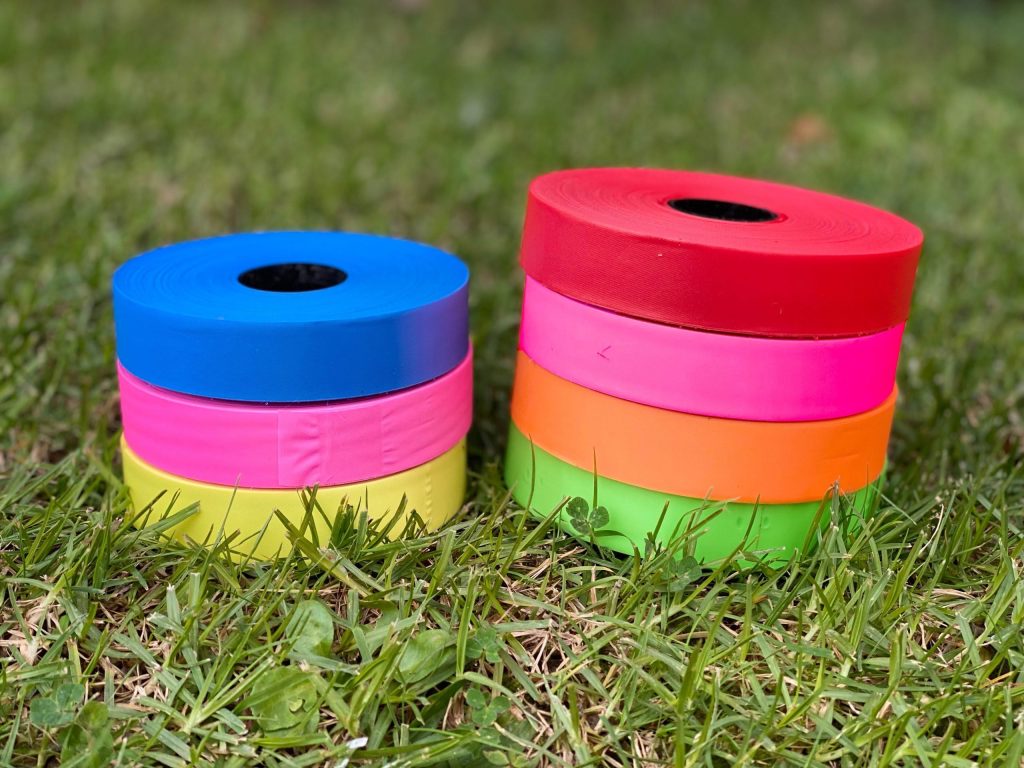
Make sure you also pick up some flagging tape or markers so you can keep track of your line when you come back to it.
Whether you’re responsible for swathes of land, or figuring out the best pest control methods on a smaller scale, these simple steps of monitoring provide plenty of data to make your efforts as effective as possible.
Working together, we can protect the taonga species that make New Zealand so unique.